
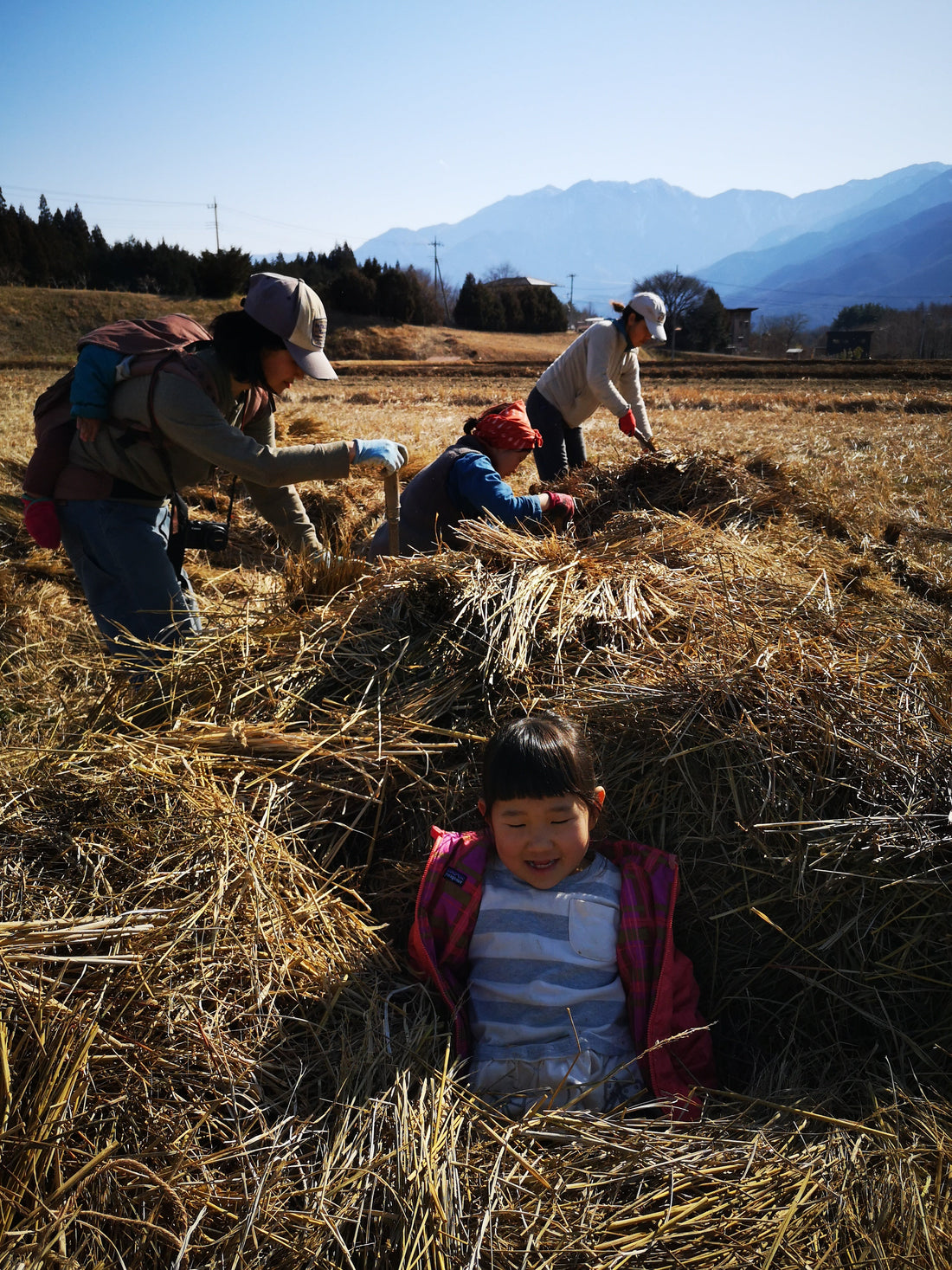
Just when you thought the warm weather had continued, the cold suddenly arrived, and the weather has become almost spring-like. The frozen fields are slowly thawing, and signs of life are returning. The sowing season has finally begun, and the joy of being able to nurture new life wells up inside us.
It feels great to work on the farm, and my friends and I are getting ready for spring.
The children ran around the fields, cheering as they skillfully spotted spiders, butterflies, and dragonflies. Collecting fallen leaves and cutting rice straw to prepare the annual greenhouse is much more fun when everyone works together, and the work can be completed in no time. I have several organic farming friends who are starting their own greenhouses this year, so I've been running around here and there to support them as they get started. It's great to see the number of people joining the greenhouse grow.
However, the still cold winter is the perfect time to play with microorganisms.
This is because the low temperature makes it difficult for bacteria to grow, and by creating the ideal conditions for useful microorganisms such as koji and yeast to thrive, it is possible to prevent the growth of mold.
This month we made rice koji to prepare miso and mirin.

We borrowed the processing plant of Kinado, a company in Hakushu that makes miso and pickles from koji, brought some old rice, and made rice koji together with the staff.
It was truly a professional facility, and I learned a lot from working in a hygienic processing plant with all the necessary equipment. The koji room is also automatically temperature-controlled, so it only requires minimal maintenance.


What's impressive is the method of rubbing the rice to make scratches and distribute the koji mold inside the grains. This allows the koji mold to be distributed evenly throughout the rice, resulting in rice koji with a rich sweetness. The finished product only has a few signs of koji flowers blooming, and the surface of the rice grains is just a little fluffy. The taste is rich and sweet, making it a delicious rice koji that can be eaten as is.


The children were also very welcoming and it was a valuable experience. They seemed to have a lot of fun mixing the rice and were excited.

This weekend I'll finally start preparing miso. I feel like I can make some delicious miso!
