How to store vegetables

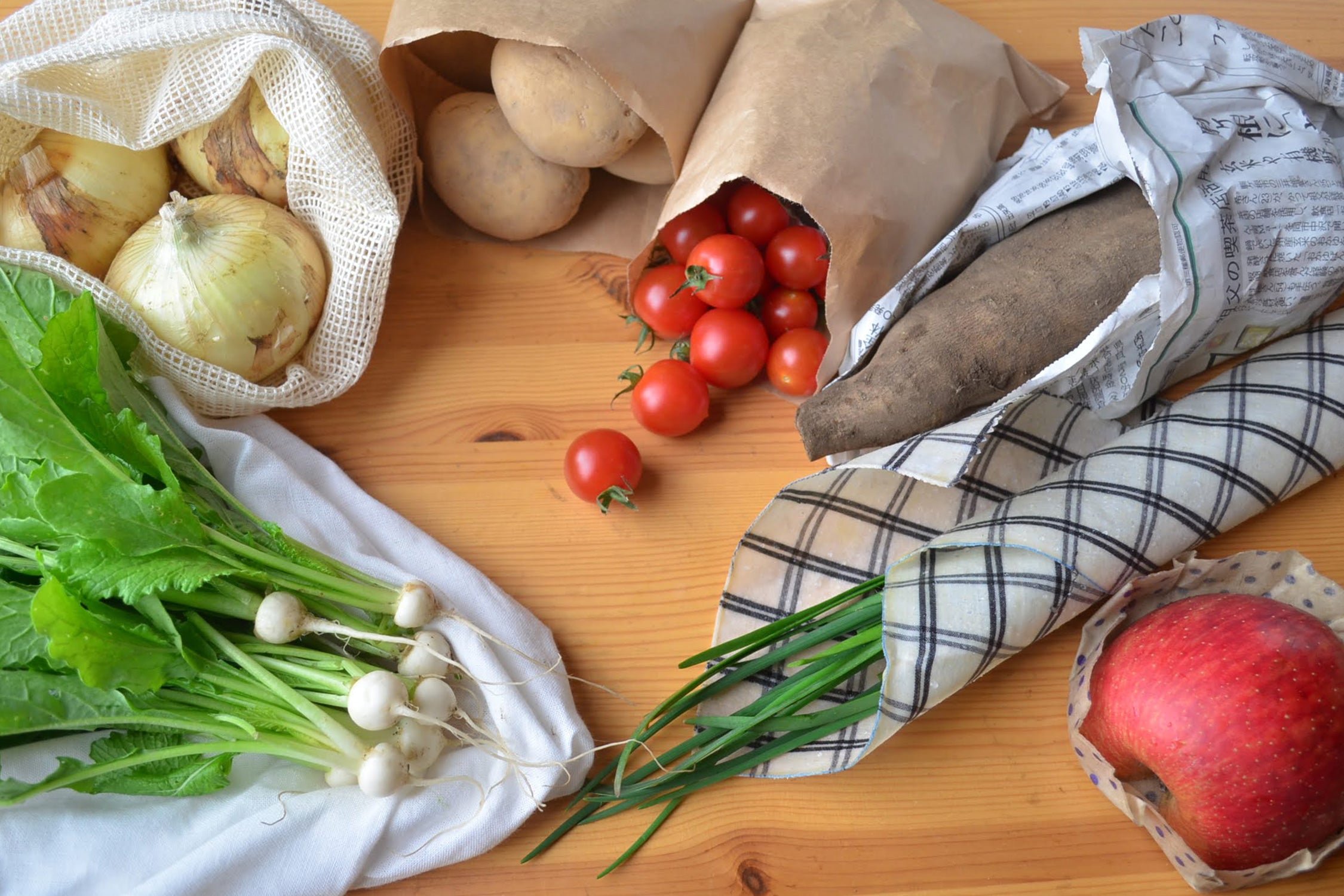
Our vegetables are delivered with minimal packaging, avoiding plastic wrap.
Here are some storage materials for keeping them at home.

  • Waxed paper bags for food packaging

    This is one of Japan's world-renowned traditional techniques, once commonly used daily to preserve the freshness of raw fish and other perishables, or to store prepared foods. Not only can it be used to store vegetables prone to spoiling, but it also allows you to freeze prepped or cooked vegetables directly in the bag. Furthermore, if it gets dirty, you can wash it and reuse it about three times. When you're done using it, lay it around the base of plants to serve as mulch (preventing weeds and retaining moisture), and it will soon decompose naturally and return to the soil.

    → Purchase here

  • Sarashi (Bleached cotton cloth)

    Sarashi refers to pure cotton fabric that has undergone no dyeing or other chemical processing, making it safe for wrapping food. Sarashi has excellent moisture-retaining properties and is recommended for storing leafy vegetables when slightly dampened. It can be washed and reused countless times. Beyond vegetable storage, it's highly versatile—use it to wrap and store leftover rice, as a dish cover, or as a straining cloth. After it's worn out, reuse it as a cleaning rag or for wiping grease. When it's finally worn out, place it around the base of potted plants to act as mulch (preventing weeds and retaining moisture). It will soon decompose naturally and return to the soil.

  • Unbleached kraft paper bag/newspaper

    Unbleached paper refers to paper that hasn't been chemically treated to whiten it, retaining its natural color. Its long fibers also make it tear-resistant, making it ideal for carrying items. Unbleached kraft paper is affordable and comes in various sizes, which is a plus. If you have newspaper on hand, you can fold it into a bag shape instead of buying paper bags. Its high humidity-regulating effect makes it ideal for storing root vegetables that dislike moisture or leafy greens that dislike drying out. Moistening it further enhances its moisture-retaining properties.

  • Cotton mesh bag

    It's convenient to put in your shopping bag when you go shopping and store small pieces of fruit, avocados, etc. It's also recommended for storing onions, garlic, etc. You can wash it and reuse it again and again.

  • Stainless steel container

    It can be used for both refrigeration and freezing. Although it is a bit expensive, it has a high recycling rate, good thermal conductivity, and is resistant to odors and breakage. If you are choosing it, choose a high-quality product labeled SUS304 (18-8 18-10).

  • glass container

    Glass food bottles, which have a high recycling rate, are inexpensive and easy to find! However, the inside of the lids are coated with plastic to prevent direct contact with food. Glass tableware and heat-resistant glass are not recycled and become non-combustible waste, so if you have to choose one, choose one made from recycled glass. Weck, made in Germany, is a glass storage container made from 50-70% recycled glass. The lids are available in a variety of sizes and shapes, including glass, cork, and wooden stoppers, making it an attractive choice.

  • Enamel container

    The metal is coated with a glass glaze. Like stainless steel, it has good heat conductivity, is odor-resistant, and can be placed over an open flame. It's slightly cheaper than stainless steel and has a cute appearance. Because it contains glass, it may crack on impact. It comes in a variety of colors, but cheaper ones from Asia and other regions, such as darker colors like red, may contain harmful substances, so white is the safest option.
    Enamel is not recycled and goes to landfill as non-combustible waste.

  • Silicone bag

    These reusable, washable airtight bags are made of silicone that can withstand high and low temperatures. Brands like Stashire, Lekue, and ZipTop use platinum silicone, which is highly pure and safe. While they are expensive, they don't leach chemicals like BPA, and can be reused almost indefinitely.
    https://stasherbag.jp/
    http://cb-j.com/lekue/
    https://ziptop.jp/

Storage methods for different types of vegetables
Root Vegetables

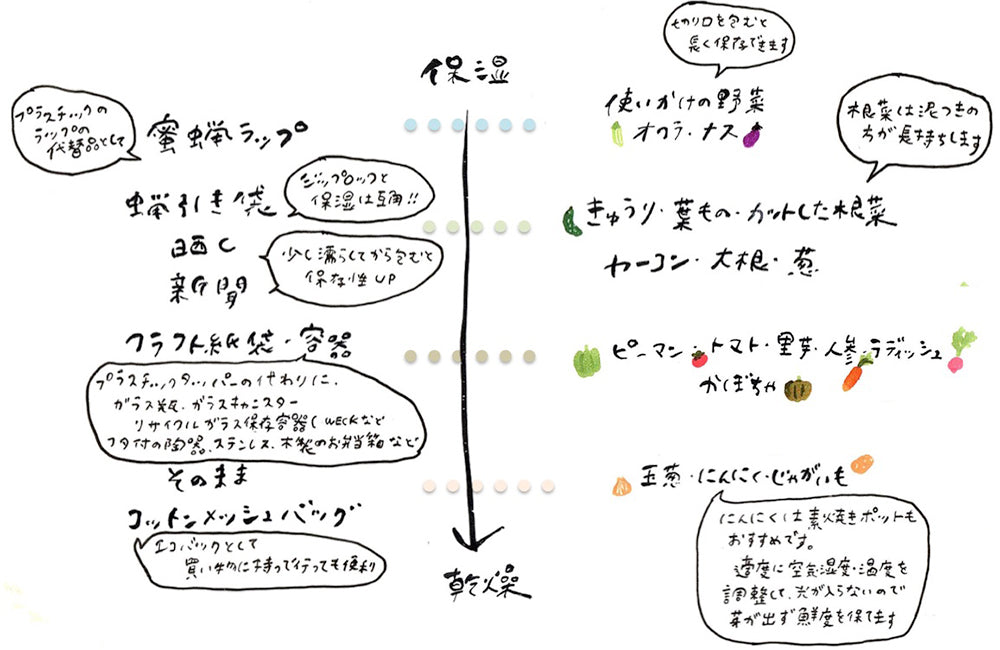
Root vegetables grown underground last longest when stored with their soil intact. Wrap them in newspaper, cotton cloth, or kraft paper bags to protect them from moisture and light, and store them in a cool, dark place.

Leafy Greens

Wrap leafy greens like komatsuna and spinach in damp newspaper or cotton cloth and store them upright in the refrigerator. Wrap head vegetables like napa cabbage and cabbage in dry newspaper or cotton cloth and store them in a cool, dark place. However, lettuce varieties, whether head or leaf types, spoil quickly, so use them up soon. If storing, wrap them in wax paper bags or cotton cloth and keep them in the refrigerator. If leafy greens have wilted, fill a bowl with lukewarm water. Trim a little off the stem (or root if still attached), immediately place the cut end in the lukewarm water, and leave them for a while. They will perk back up.

Fruit Vegetables

The ideal storage temperature for summer staples like tomatoes, bell peppers, and cucumbers is around 10°C (50°F). They contain a lot of moisture, so if it's too warm, mold can develop. If it's too cold, nutrients break down to protect the vegetable, resulting in a weaker flavor. Tomatoes and bell peppers can be stored in unbleached kraft paper bags. Cucumbers should be wrapped in wax paper, unbleached paper, or newspaper and stored in the refrigerator's crisper drawer or a cool, dark place. Eggplants and okra are sensitive to drying out, so wrap them in moisture-retaining materials like unbleached paper or wax paper and use them up quickly.

Legumes

Pod vegetables like peas and green beans spoil quickly. Wrap them in unbleached cotton or wax paper and refrigerate, using them promptly. Alternatively, boil them until firm and freeze in glass jars or stainless steel containers.

Herbs

Aromatic herbs like parsley, oregano, thyme, and mint stay crisp and last longer if you cut the stems under running water and keep them in a vase of water.

If you can't use them fresh, drying them intensifies their aroma and extends their usability. (Herbs suitable for drying: oregano, thyme, mint, parsley)

How to Dry Herbs

① Rinse briefly under water.

Herbs contain beneficial bacteria, so avoid washing them in hot water or soaking them for long periods.

② Drain water, spread on a colander, and dry in a shaded, well-ventilated area.

Avoid direct sunlight, as it can cause color and aroma to fade.

Vegetables Requiring Special Storage

Broccoli/Rapeseed Flowers

Broccoli and rapeseed flowers spoil quickly among green and yellow vegetables. If not eaten immediately, blanch them firmly, then store in a container or waxed paper bag in the refrigerator.

Yacon

Once dried, the surface becomes mushy and loses texture. Store with soil attached, wrapped in two or three layers of newspaper, in a cool, dark place.

Eggplant

Eggplant dries out from the stem end. Store in a cloth or waxed paper bag with high moisture retention in a vegetable compartment or cool, dark place at temperatures between 6°C (43°F) and 10°C (50°F). Use promptly. For longer storage, steam or roast the eggplant while fresh, then freeze it in a waxed paper bag. This preserves flavor better than freezing it raw.

Okra

Okra is sensitive to drying and low temperatures. Like eggplant, drying progresses from the stem end. Store it in a moisture-retaining cloth or waxed paper bag in a vegetable compartment or cool, dark place with temperatures between 6°C (43°F) and 10°C (50°F), and use it up quickly. Alternatively, place the pods upright in a container with a small amount of water covering the stem ends; this allows storage for about a week. For long-term storage, rub the pods on a cutting board to remove the fuzz, then blanch them in boiling water for just 3 seconds. Freeze them whole or cut, wrapped in wax paper.

Corn

Corn loses freshness quickly, so it's best to boil it immediately and store it refrigerated or frozen. If immediate boiling isn't possible, wrap them in newspaper and store upright in a cool, dark place.

Edamame

Since edamame loses freshness quickly once removed from the stem, it is delivered still attached. You can store it with the stem attached or remove the pods from the stem, wrap them in damp newspaper or cheesecloth, and keep them in the refrigerator's vegetable compartment. However, since freshness declines rapidly, it's best to boil them promptly, place them in a waxed paper bag, and store them in the refrigerator. For long-term storage, cut the pods from the stems and freeze them raw or after boiling in a waxed paper bag.

Water Spinach

Water spinach, particularly sensitive to drying among leafy greens, should have its cut ends trimmed slightly. Soak it briefly in water to crisp it up, then wrap the cut ends in damp paper towels. Cover with newspaper or cotton cloth and store in the refrigerator's crisper drawer.

Molokheiya

Store wrapped in wax paper or cotton cloth in the refrigerator's crisper drawer. As freshness declines, the leaves become tough, so it's recommended to quickly blanch them before placing in wax paper and refrigerating.

Stalk lettuce

Stalk lettuce spoils quickly. Wrap it in damp newspaper or cotton cloth to prevent drying out and store in the refrigerator.

Cut vegetables

Wrapping them in cheesecloth alone is fine, but for better moisture retention and longer storage, placing them in a waxed paper bag will extend their shelf life.